
Key Takeaways on Sales Automation
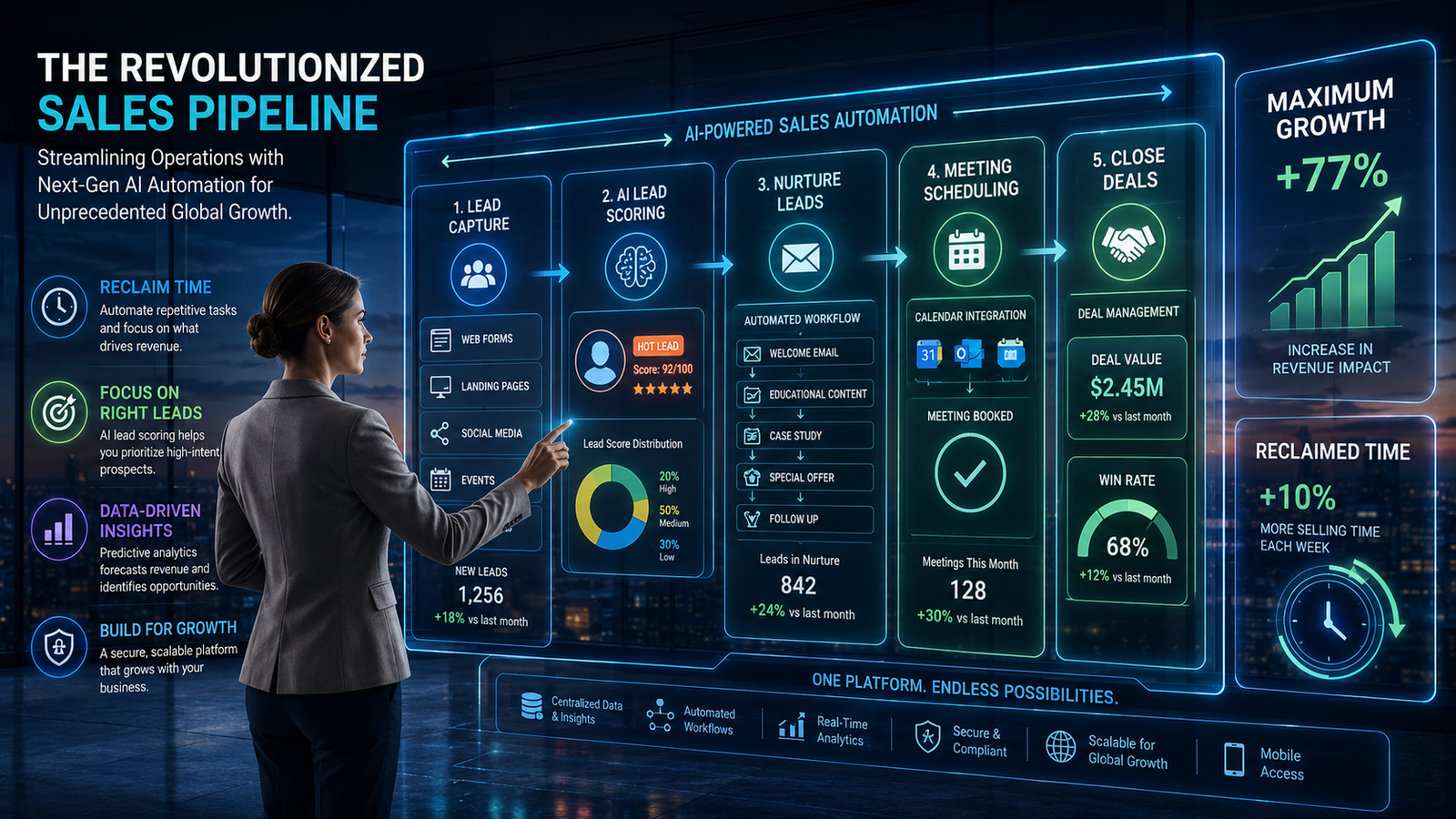
- Reclaim Your Time: Sales representatives spend nearly 70% of their week on non-selling activities. Sales automation recovers this time by handling data entry, scheduling, and follow-ups, allowing your team to focus exclusively on closing deals.
- Consistency at Scale: An automated sales funnel ensures that every lead receives a personalized, high-quality experience 24/7 without manual intervention, preventing prospects from falling through the cracks.
- Work Smarter, Not Harder: AI lead scoring identifies your most qualified prospects in real-time. By focusing on “hot” leads with high intent, your team can increase lead generation ROI by up to 77%.
- Data-Driven Foresight: Predictive sales analytics moves your strategy from reactive to proactive. It allows you to forecast revenue with precision, identify churn risks before they happen, and optimize your pricing for every deal.
- Infrastructure for Growth: The right sales automation software acts as a central nervous system for your business, providing a single source of truth for your data and ensuring your sales operations are secure, mobile, and compliant.
- Human-Centric Automation: Automation is not about replacing the salesperson; it is about removing the “robotic” administrative work so your team can lead with empathy, relationship-building, and strategic problem-solving.
Did you know that sales representatives spend a staggering 70% of their workweek on administrative tasks, data entry, and manual follow-ups? This means that most teams are only spending about 35% of their time actually selling to prospects. In a competitive market, these minor inefficiencies are magnified, resulting in significant economic loss and missed profits.
But what if your operations could work with increased precision and speed? This is what sales automation enables. For the businesses of today, it is no longer a luxury, it is a necessity for survival and growth. This guide explores how to transform a stagnant pipeline into a high-velocity revenue engine using intelligent technology.
What is Sales Automation?
To build a modern sales team, you must first understand the foundation of efficiency. Sales automation is the process of using software to eliminate repetitive, manual tasks in the sales cycle. Instead of forcing humans to perform robotic work, you deploy technology to handle administrative burdens.
- Elimination of Manual Entry
Modern software automatically syncs contact details from your emails, calendar, and LinkedIn profiles directly into your CRM system. This means your sales reps no longer have to spend hours typing in names, phone numbers, or job titles, which keeps your database clean and up to date without any human effort.
- Workflow Standardization
Every lead you generate follows the same structured path through your pipeline, ensuring that no prospect ever falls through the cracks or gets forgotten. By setting up these uniform rules, you guarantee that every customer receives the exact same high-quality experience and professional follow-up regardless of which salesperson manages the account.
- Time Reallocation
Research shows that sales reps currently spend only 35% of their work day actually selling to prospects; sales automation recovers most of that lost time. By removing the burden of administrative paperwork, you allow your team to spend their entire day on high-value activities like taking meetings, building relationships, and closing deals.
- Scalability
You can easily manage thousands of prospects simultaneously at a very high level of quality without needing to hire dozens of new administrative assistants. Automation allows your existing team to handle a much larger volume of leads because the software does the heavy lifting of sorting, organizing, and tracking every interaction for you.
- Error Reduction
Automated systems do not suffer from fatigue, boredom, or forgetfulness, which ensures that every follow-up email and data update remains 100% accurate at all times. By taking the “human element” out of repetitive data tasks, you eliminate common mistakes like sending an email with a misspelled name or forgetting to update a deal’s closing date.
How to Create an Automated Sales Funnel
Building an engine that runs while you sleep requires a strategic setup. Knowing how to create an automated sales funnel allows you to nurture prospects through the buyer’s journey without manual intervention.
- Lead Capture Automation
You can use smart web forms on your website that instantly trigger a personalized “Welcome” email the moment a user submits their data. This immediate response ensures that you engage with a potential customer while your brand is still fresh in their mind. This significantly increases the chances that they will continue moving through your sales process.
- Nurture Sequences
You can set up a series of educational emails that send out automatically based on specific user behaviors, such as when a person downloads a whitepaper or signs up for a newsletter. These automated messages provide consistent value to your prospects over several days or weeks, building trust and authority for your brand without you having to manually hit “send” on every individual email.
- Trigger-Based Actions
You can program your funnel to notify a specific sales representative immediately when a prospect performs a high-intent action, such as visiting your pricing page three times in a single day. This real-time alert allows your team to reach out with a phone call or a personal message at the exact moment the buyer is considering a purchase, which greatly improves your conversion rates.
- Meeting Scheduling
You can integrate specialized tools that allow prospects to book demos or consultation calls directly onto your team’s calendar by choosing a time that works for everyone. This eliminates the frustrating and time-consuming back-and-forth scheduling emails that often lead to lost interest. It also makes it incredibly easy for a lead to commit to a formal meeting with your company.
- Automated Re-engagement
If a lead goes cold and stops interacting with your content for 30 days, the system can automatically send a friendly “checking in” message to spark new interest. This automated follow-up ensures that your brand stays top-of-mind and gives you a second chance to win over a customer who might have simply become distracted by other tasks.
How to Transform Qualification with AI Lead Scoring
Not all leads are equal. Using AI lead scoring allows your team to focus their energy on the prospects most likely to convert. Lead scoring AI analyzes historical data to identify the characteristics of your best customers.
- Behavioral Tracking
The AI system monitors every action a prospect takes and automatically assigns points when a lead opens an email, clicks a specific link, or attends a live webinar. By tracking these digital footprints, the software builds a clear picture of how interested each person is in your products. It ensures you know exactly who is actively engaging with your content and who is ignoring it.
- Demographic Filtering
This technology automatically prioritizes leads from specific industries, company sizes, or job titles that perfectly match your ideal customer profile. It filters out people who do not have the budget or authority to buy your services. That saves your sales team from wasting hours on phone calls with prospects who are simply not a good fit for your business.
- Real-Time Updates
As a lead continues to interact with your brand over time, their score changes instantly in your database, moving them up or down your priority list based on their latest actions. This dynamic update system ensures that your sales reps are always looking at the most current data, so they never miss an opportunity because a lead suddenly became very active after months of silence.
- Intent Signaling
High scores act as a digital “flare” that alerts your team to “hot” leads, allowing your salespeople to reach out at the exact moment the prospect is showing strong signs they are ready to buy. By contacting a lead when their intent is at its peak, your team can have more relevant conversations that lead to faster deals and a much shorter overall sales cycle.
- Conversion Optimization
Statistics show that companies using lead scoring AI see a 77% increase in lead generation ROI compared to those using manual methods. This massive improvement happens because your team stops chasing low-quality leads and spends 100% of their time on the high-value prospects that are statistically proven to turn into paying customers.
How Can Predictive Sales Analytics Transform Your Pipeline?
Data is only useful if it helps you see the future. Predictive sales analytics uses your past performance to forecast future trends and identify hidden risks in your pipeline.
- Accurate Revenue Forecasting
Using predictive analytics for sales allows you to calculate exactly how much revenue you will close by the end of the month or quarter with incredible precision. Instead of guessing based on gut feelings, you can look at hard data that tells you which deals are likely to close and which ones are stuck. This helps you plan your business budget with total confidence.
- Churn Prevention
Predictive analytics in sales identifies specific patterns or behaviors that suggest a current client might be unhappy or thinking about leaving your service. By catching these warning signs early, the system allows you to intervene with a phone call or a special offer to save the relationship before the customer actually cancels their contract.
- Optimal Pricing Models
Artificial intelligence analyzes current market conditions, competitor pricing, and your history of past wins to suggest the best possible price point for every specific deal you are working on. This ensures that you are not leaving money on the table by underpricing your services, while also preventing you from losing deals because your quote was too high for that specific prospect.
- Territory Management
You can use data to see exactly which geographic regions or specific industries are currently showing the highest demand for your product or service right now. This allows you to move your sales team’s focus toward the areas that are “heating up”. It ensures that you are always spending your marketing and sales budget where you are most likely to get a fast return on your investment.
- Win-Loss Analysis
The software automatically evaluates every deal you lose to figure out exactly why it failed, providing you with clear data on which specific sales stages or techniques require improvement. By understanding these patterns, you can fix the weak spots in your process and train your team to avoid the same mistakes in future negotiations. This leads to a much higher overall win rate.
How to Choose the Right Sales Automation Software
The success of your strategy depends on the tools you select. High-quality sales automation software acts as the central nervous system for your entire business development team.
- Centralized Data
You must ensure your software provides a centralized place where your marketing and sales data live together in one unified location. This eliminates “data silos” where different departments hold different information. Therefore, it allows everyone in your company to see the same accurate details about a customer’s history, past purchases, and current needs without any confusion.
- Integration Capabilities
Your chosen automation tool must connect seamlessly with your email, digital calendar, and existing business applications to ensure data flows freely between systems. When your tools “talk” to each other, you avoid the frustration of moving data manually, which keeps your team focused on selling rather than fixing technical connections between different pieces of software.
- Mobile Accessibility
Top-tier software allows your sales representatives to update the pipeline, view customer notes, and receive real-time alerts directly from their smartphones while they are traveling or out in the field. This flexibility ensures that your team stays productive even when they are away from their desks, allowing them to log important meeting details immediately while the information is still fresh in their minds.
- Security and Compliance
It is vital to choose platforms that offer enterprise-level encryption and fully comply with global data privacy regulations like the GDPR. Protecting your prospects’ sensitive information not only prevents expensive legal issues but also builds a deep sense of trust with your customers. It shows them that your company takes their digital privacy and security seriously.
- Custom Reporting
You should select a tool that allows you to create visual dashboards so you can see the overall health of your sales pipeline at a glance without having to run long manual reports. These visual charts and graphs make it easy for managers to spot trending problems or hidden opportunities in seconds. This helps you make faster and much more effective business decisions.
Conclusion
Implementing sales automation is no longer a luxury for big corporations. It is a vital step for any business that wants to grow without burning out its team. By using AI lead scoring and an automated sales funnel, you stop wasting time on manual paperwork and start spending your energy where it matters, building real relationships with your customers.
When you combine predictive sales analytics with the right sales automation software, you gain a clear view of your future revenue and can fix hidden problems. Automation doesn’t just make your work faster, it makes your entire sales process smarter, more accurate, and much more profitable.
Ready to Build a High-Velocity Sales Engine?
Stop letting manual tasks slow your growth. At Nexifinity, we specialize in designing custom sales automation systems that handle the heavy lifting for you. From setting up AI lead scoring to building a fully automated sales funnel, we help you turn your pipeline into a predictable revenue machine.
Contact Nexifinity Today for a Free Automation Strategy Session
Frequently Asked Questions (FAQs)
-
Will sales automation make my outreach feel cold or robotic to my customers?
Not if you do it correctly. Modern sales automation software allows you to use “dynamic fields” that insert specific details like a prospect’s name, company, or recent business achievement. This ensures your messages feel personal and relevant while still being sent automatically.
-
How much time does it typically take to see results from an automated sales funnel?
Most businesses see a noticeable difference in their team’s productivity within the first 30 days. Once your how to create an automated sales funnel plan is live, you will immediately notice hours of saved time that were previously spent on manual follow-ups and data entry.
-
Is AI lead scoring only useful if I have thousands of leads every month?
No. Even if you only have a few dozen leads, AI lead scoring is valuable because it helps you identify which ones are ready to buy right now. This prevents you from calling someone too early and potentially scaring them away before they are ready for a sales conversation.
-
Can I use predictive analytics in sales if my past data is a bit messy?
Yes. Part of our process at Nexifinity is helping you clean and organize your data. Once your information is structured, predictive sales analytics can begin to find patterns and provide accurate forecasts, even if your historical records weren’t perfect in the past.
-
What happens if the sales automation software makes a mistake in an email?
We set up “safety checks” and approval stages for high-value deals. This means the sales automation handles the routine work, but for your biggest prospects, the system prepares the message as a draft for you to review and hit “send” yourself, giving you total control.