
Key Takeaways
- Shifting from Admin to Strategy: HR teams often waste over 40% of their time on paperwork. AI in HR is not about job replacement; it’s about automating administrative burden to free up HR professionals for high-value work like retention, strategy, and employee engagement.
- Revolutionizing Talent Acquisition: AI makes the hiring process faster, smarter, and fairer:
- Automated Screening: Quickly scans and ranks thousands of resumes based on relevant skills and experience, saving significant time.
- Bias Mitigation: Algorithms, when set up correctly, facilitate diversity and fairness by focusing on objective, work-related metrics.
- Intelligent Engagement: AI chatbots handle FAQs, schedule interviews, and provide immediate information, creating a seamless candidate experience.
- Cultivating Existing Talent: AI is crucial for Talent Management and retention:
- Personalized Learning: AI analyzes individual competencies and career paths to recommend highly tailored training and development modules.
- Predictive Retention: AI analyzes employee data (performance, engagement, tenure) to identify potential flight risks proactively, allowing HR to intervene before turnover occurs.
- Objective Feedback: AI aggregates performance data from multiple sources to provide unbiased, continuous insights, reducing subjectivity in evaluations.
- Core Business Benefits: The strategic use of AI automation in HR delivers:
- Better Quality of Hire: Matching candidates to roles with greater precision, leading to lower mismatches and higher long-term retention.
- Cost Savings: Reducing recruitment time and lowering costly employee turnover.
- Data-Driven Decisions: Providing sophisticated predictive analytics on performance, engagement, and attrition to guide strategic planning.
- Superior Employee Experience: Offering instant, personalized support (HR chatbots) and fairer processes, which boosts employee satisfaction and morale.
How much of your HR team’s time gets wasted by paperwork? Hiring and managing employees the old way can be time-consuming, and expensive, and also result in lost opportunities for great talent. For example, HR pros can waste more than 40% of their time on administrative work, which doesn’t leave much time for strategic programs. This doesn’t just stall hiring, it also affects employee engagement and retention.
The good news is that there is a powerful answer that is helping HR operations to become smarter and more people-focused: AI automation. Make no mistake, this tech is not for replacing human HR teams. Instead, it enhances HR by making processes more efficient and focused on long-term goals.
This shows how AI in HR fits into a wider picture of efficiency and growth, as covered in our Complete Guide to AI Automation for Business Growth.
In this blog, we’ll take a closer look at how different AI tools are being used in HR. We’ll also show how smart HR automation can simplify operations, improve the employee experience, and help HR teams support overall business success.
First up, we’ll discuss how AI is changing the way organizations find and recruit talent.
AI in Talent Acquisition: Finding the Right People, Faster and Smarter
For most businesses, the first big HR challenge is in locating talent. Traditional hiring processes tend to be time-consuming, costly, and inefficient. Regrettably, it can also be inadvertently biased. This is where AI automation comes into play to ensure that the automation of the recruitment process is more efficient, fair, and intelligent.
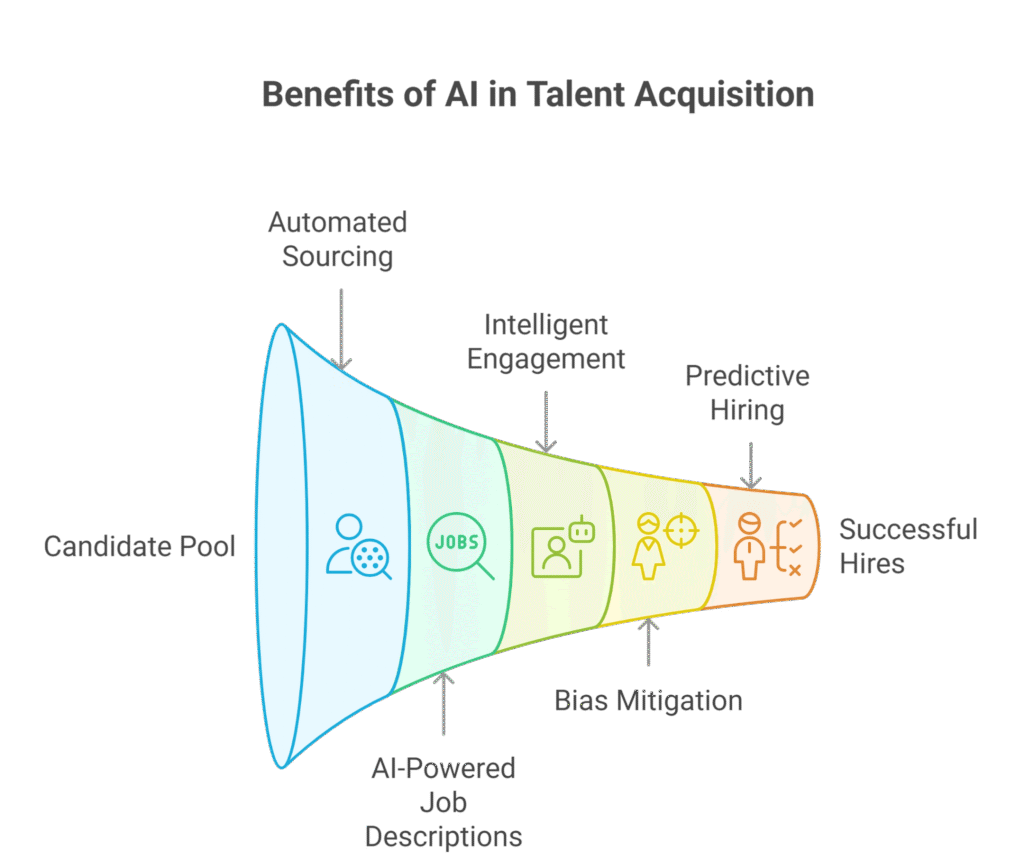
1. Automated Candidate Sourcing & Screening
Sorting through thousands of resumes and online profiles for a single opening is a huge, labour-intensive project. However, this is a prime area of AI in HR. AI can quickly scan job boards, social media platforms, and internal databases to gather candidate information without manual effort.
It can focus on relevant skills, experience and qualifications that match your job requirements, categorizing or ranking candidates accordingly. It can automate the processing of those resumes, ranking candidates, in a process that is a huge time saver and move forward more quickly with applicants who make the cut.
2. AI-Powered Job Descriptions & Ad Optimization
Writing clear and engaging job descriptions plays an important role in attracting the right candidates during the hiring process. AI in HR now involves tools that will analyze the job descriptions you’ve already written and stack them against market data.
They can highlight more inclusive language that actually draws in a more diverse and varied pool of qualified applicants, which can help to reduce the subtly biased language from job postings.
3. Intelligent Candidate Engagement
First impression matters and a seamless application process can go a long way in changing a candidate’s perception of your company. AI chatbots are becoming popular for intelligent candidate engagement. These bots can handle many of the most common first questions applicants have. They quickly respond with information about the job, company culture, or application process.
They can automate scheduling interviews, and send reminders, adding to the overall employee experience even before they’re hired.
Just as AI streamlines HR, it also significantly enhances customer interactions. Discover how in our post about AI Virtual Assistants: Revolutionizing Customer Service.
4. Bias Mitigation
A major breakthrough in AI recruiting is its ability to help minimize unconscious bias during the hiring process. Even the best human recruiters might be swayed by things that aren’t truly relevant to your experience.
AI algorithms (if set up correctly) can make decisions strictly based on qualifications, experience and other work-related metrics in the early hiring phases. This facilitates diversity and fairness in hiring.
5. Predictive Hiring
Going further than screening, AI in HR can aid in predictive hiring. Through processing data about previous hires, the current performance of employees, and the characteristics of candidates, AI can indicate how likely a candidate is to succeed in a particular role.
It can also estimate how likely a candidate is to accept a job offer. This type of predictive analytics can help HR teams make more educated decisions and act according to the data.
AI’s role doesn’t end when a candidate is hired. It also plays a key part in helping organizations manage, support, and retain their employees in smarter ways.
AI in Talent Management: Cultivating Your Own Talent And Retaining Your Staff
Attracting the right people is half the battle. Keeping them engaged, developing their skills, and ensuring they feel valued are crucial for long-term success. That’s where the impact of AI automation comes into play. It reshapes how HR departments manage their existing workforce, leading to a better employee experience and lower attrition.
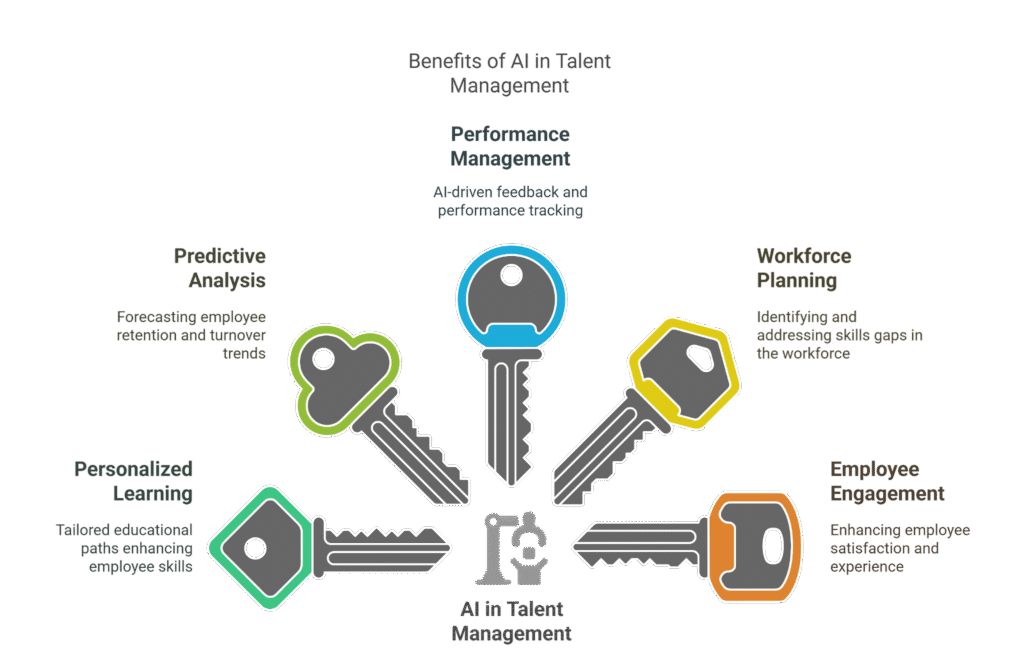
1. Personalized Learning & Development
Personalized learning is one of the most important AI use cases in HR for existing employees. Instead of average training packages, AI has the capacity to dissect an individual employee’s current competencies, previous performance, and career plans, even their work activities on a day-to-day basis to determine exactly what they’re missing.
It can then recommend extremely tailored training modules, classes and development paths based on this. This personalized strategy helps employees acquire the necessary skills that would help them develop and adapt effectively within the company.
2. Predictive Retention & Turnover Analysis
Employee turnover is extremely expensive. It also impacts productivity, keeps team spirit down and weighs heavily on you as hiring requires serious resources. Examples of AI in HR range from intelligent solutions to predicting and preventing employee turnover using predictive analytics.
By analyzing different data throughout the organization, including performance trends, engagement survey results, tenure and even internal communication patterns, AI can identify potential flight risks.
By acting on it, HR can work to retain these individuals by providing development such as new career opportunities or engaging with their concerns.
3. Performance Management & Feedback
Performance evaluations are often subjective and may occur infrequently. AI in HR tools is shifting that by giving companies access to more unbiased and continuous insights into employee performance. AI can aggregate and summarize feedback from different avenues such as project management tools, peer reviews, manager feedback, and even self-assessments.
It can then offer a neutral window into performance patterns, strengths and areas where an employee might need more support or training. Thus, it helps counteract unconscious bias in ratings and makes feedback timelier and more helpful.
4. Workforce Planning & Skills Gap Analysis
Going forward, companies must make sure their workforce has the right skills for future growth and changing market needs. AI in HR is a cornerstone of strategic workforce planning. It looks at the types of skills the organization currently has against anticipated business requirements or technology changes.
This enables HR to pinpoint high-priority areas for skill gaps across the organisation and recommend proactive approaches to retrain current employees or upskill teams. This creates an agile workforce with the training it needs to tackle future challenges and opportunities.
5. Employee Engagement & Experience
In addition to formal functions, AI automation also delivers value in the day-to-day employee experience. Solutions using AI, such as AI-based HR chatbots, could also answer typical employees’ questions about policies, benefits or business processes, and enhance overall employees’ satisfaction.
AI can even do things like sentiment analysis in internal communications (always with privacy in mind) and offer insight into how the overall sentiment in the organization is. It can help HR identify issues ahead of time before they start to impact morale or people start to leave. This allows employees to feel heard and supported.
Now that we’ve seen how AI supports both hiring and managing talent, let’s explore the broader benefits it brings to HR teams and organizations as a whole.
Key Benefits of AI Automation in HR
The strategic use of AI automation in HR delivers broader benefits that can change the game for the organization as a whole. Then, if you combine the technological progress in recruiting with smart talent management tools, you get an overall HR function that is more efficient, objective, and successful.
Here’s how AI in HR provides immense value:
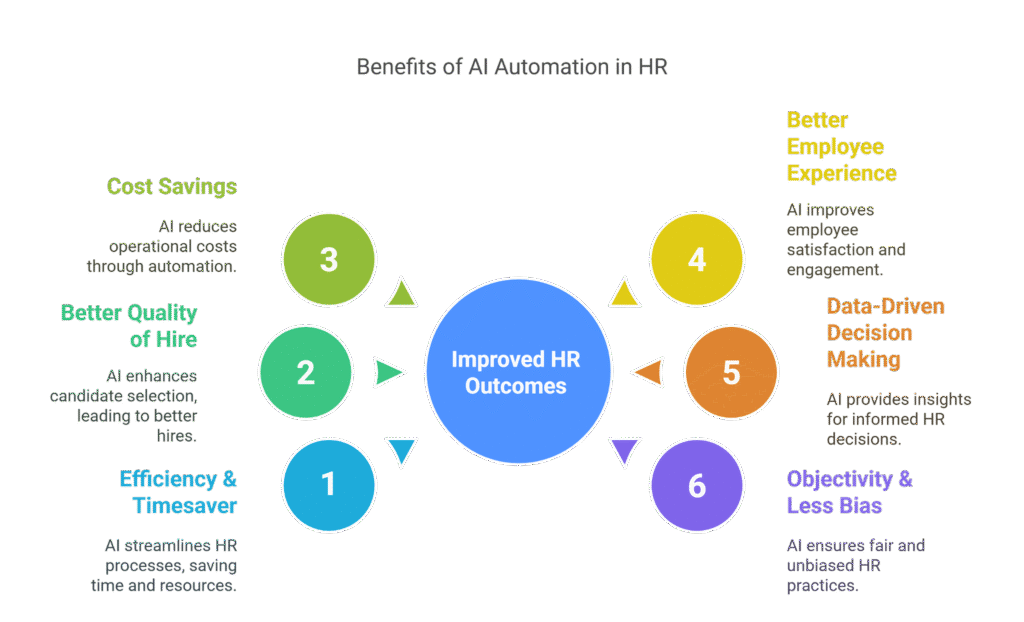
1. Efficiency & Timesaver
Easily the most tangible and direct benefit is the elimination of wasted time spent on grunt work during the processes of talent acquisition and talent management. With the ability to screen thousands of resumes, schedule interviews, follow up with common employee questions and compile simple reports, HR automation gives precious time back to your HR employees.
2. Better Quality of Hire
By employing AI in recruiting, businesses can expedite the process of locating better-fit candidates. AI can process large data sets and match skills to job needs in an unbiased way. So you are more likely to identify candidates that are qualified not just on paper but fit well with your company culture. This reduces mismatches and increases your long-term retention.
3. Cost Savings
When you have efficient processes, you spend less money. Reducing recruitment costs through better sourcing and screening helps save money upfront. Additionally, lowering turnover with preventive retention strategies and maximizing training investments through individualized learning paths all contribute to a healthier balance sheet. HR operations are getting leaner and AI automation is at the forefront of it.
4. Better Employee Experience
AI in HR is not just about processes, it greatly improves the employee experience too. From instant personalized support provided via AI chatbots to tailored development opportunities, employees now receive help that meets their specific needs. These improvements, along with fairer processes, help them feel more valued, supported, and engaged throughout their careers.
5. Data-Driven Decision Making
One of the most powerful benefits of AI in HR is its ability to provide actionable insights. Through sophisticated predictive analytics, predictions can be used to inform what have typically been intuitive or data-limited HR decisions.
AI processes massive volumes of employee and market data and discerns patterns in performance, engagement, and potential attrition. It enables HR leaders to progress from following a hunch to making informed, data-driven decisions.
6. More Objectivity & Less Bias
As seen in AI in HR examples, particularly in recruitment and performance evaluation, AI algorithms can be designed to minimize unconscious human bias. By focusing on objective criteria like skills, qualifications, and measurable performance, AI helps ensure fairness and promotes diversity and inclusion within the workforce, creating a more equitable environment.
Conclusion: The Future of HR is Intelligent
The demands on HR professionals are constantly increasing, from finding the right talent in a competitive market to ensuring every employee thrives. As we’ve seen, AI automation is no longer a futuristic concept but a powerful, practical solution that is fundamentally reshaping both talent acquisition and talent management.
From streamlining the recruitment process automation through smart sourcing and screening to enhancing the employee experience with personalized learning and predictive retention tools, AI in HR delivers tangible benefits. It boosts efficiency, improves the quality of hires, reduces costs, and provides data-driven insights that empower HR to make truly strategic decisions.
Most importantly, it frees HR professionals from administrative burdens and allows them to focus on the human-centric aspects of their roles. The successful use of AI in HR means a more objective, efficient, and ultimately more humane approach to managing your most valuable asset: your people.
Ready to leverage AI to optimize your HR operations and build a future-ready workforce? Nexifinity specializes in designing and implementing customized AI HR automation solutions for both talent acquisition and management. Contact us today to discuss how we can help your HR team become more strategic and efficient.